FEBRUARY SEMINAR

Presenters – Red de Mujeres Matamba y Guasá, Mirna Rosa Herrera Vente, Laura Rodriguez Castro (Southern Cross University), Paula Satizábal (Helmholtz Institute for Functional Marine Biodiversity)

Epistemic extractivism is a process of objectification, extraction and victimisation. Research projects that operate under extractivist and colonial logics, appropriate and plunder ideas, knowledges and resources for the accumulation of capital and power, as well as depoliticise and commodify grassroots’ political agendas. Through collective dialogues and a women’s gathering, comadreando en juntanza, undertaken in 2024 with the Black and Indigenous Women’s Network Matamba y Guasá from Timbiquí, Cauca, Colombia, we collectively reflect on the experiences of epistemic extractivism, its impacts and the ways in which it has and continues to be actively challenged and resisted. Grounded in popular pedagogies, and Black, interethnic and anti/decolonial feminist epistemologies and praxis we highlight the importance of healing and countering this violence by opening spaces that honour sovereignty, autonomy, joy, rest, and oral, spiritual and ancestral knowledges
MAY SEMINAR

YouTube player

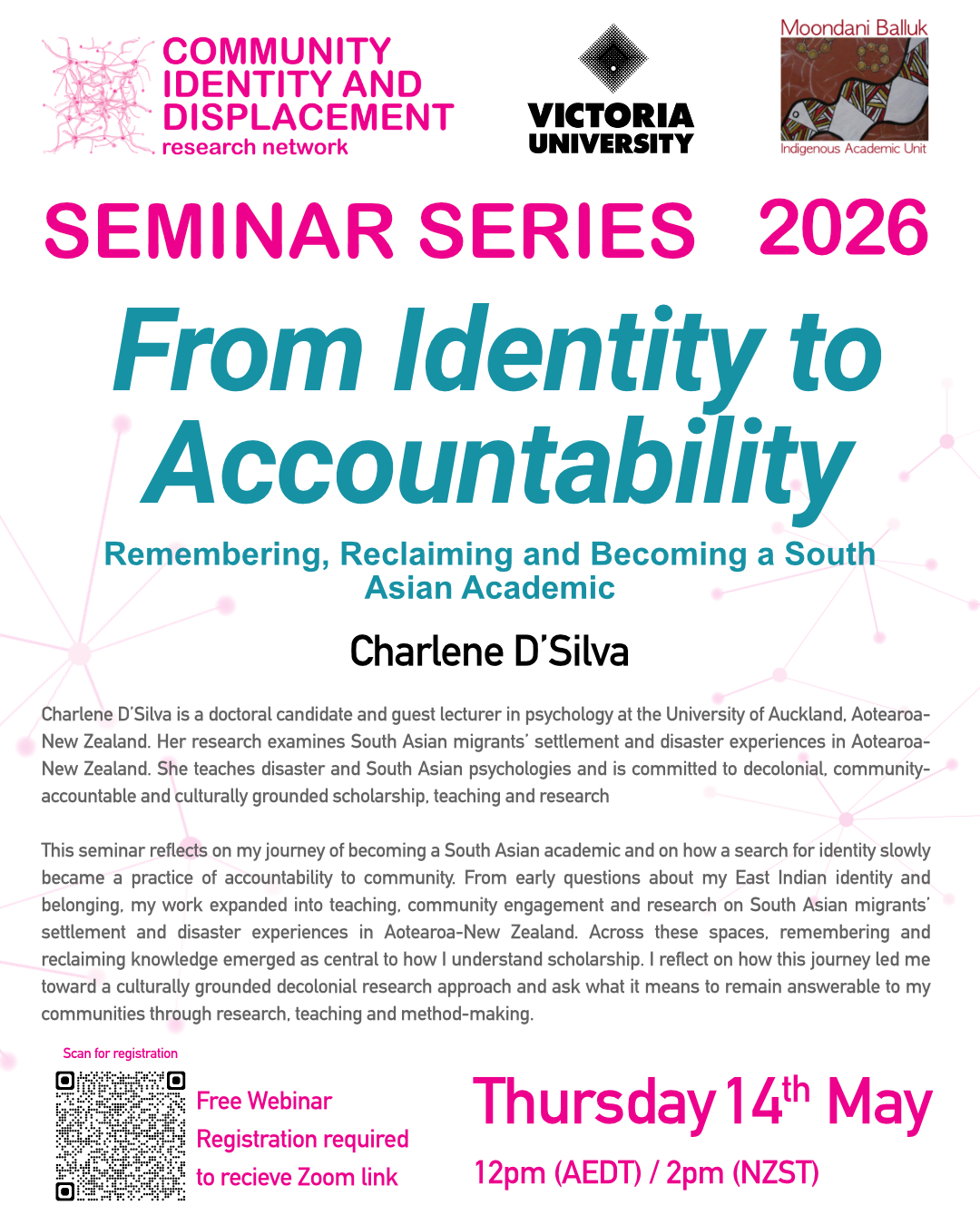
Charlene D’Silva

Charlene D’Silva is a doctoral candidate and guest lecturer in psychology at the University of Auckland, Aotearoa- New Zealand. Her research examines South Asian migrants’ settlement and disaster experiences in Aotearoa- New Zealand. She teaches disaster and South Asian psychologies and is committed to decolonial, communityaccountable and culturally grounded scholarship, teaching and research

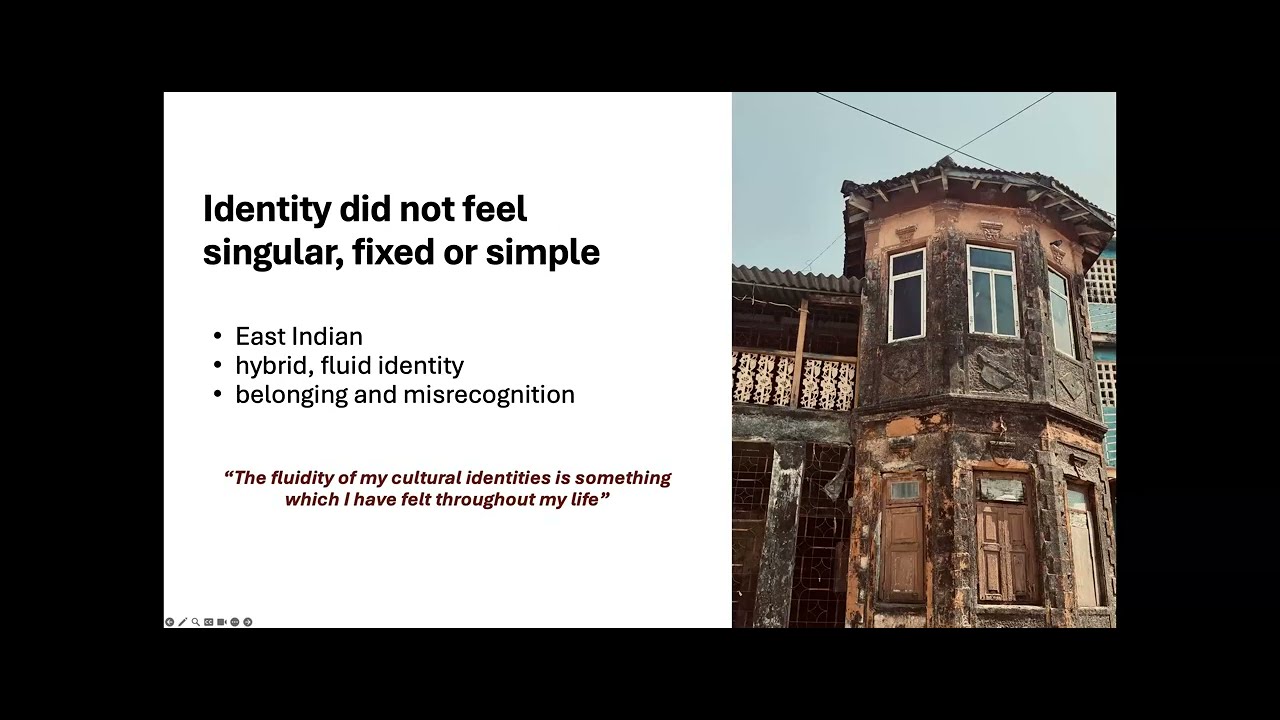
This seminar reflects on my journey of becoming a South Asian academic and on how a search for identity slowly became a practice of accountability to community. From early questions about my East Indian identity and belonging, my work expanded into teaching, community engagement and research on South Asian migrants’ settlement and disaster experiences in Aotearoa-New Zealand. Across these spaces, remembering and reclaiming knowledge emerged as central to how I understand scholarship. I reflect on how this journey led me toward a culturally grounded decolonial research approach and ask what it means to remain answerable to my communities through research, teaching and method-making.

SEPT SEMINAR

YouTube player

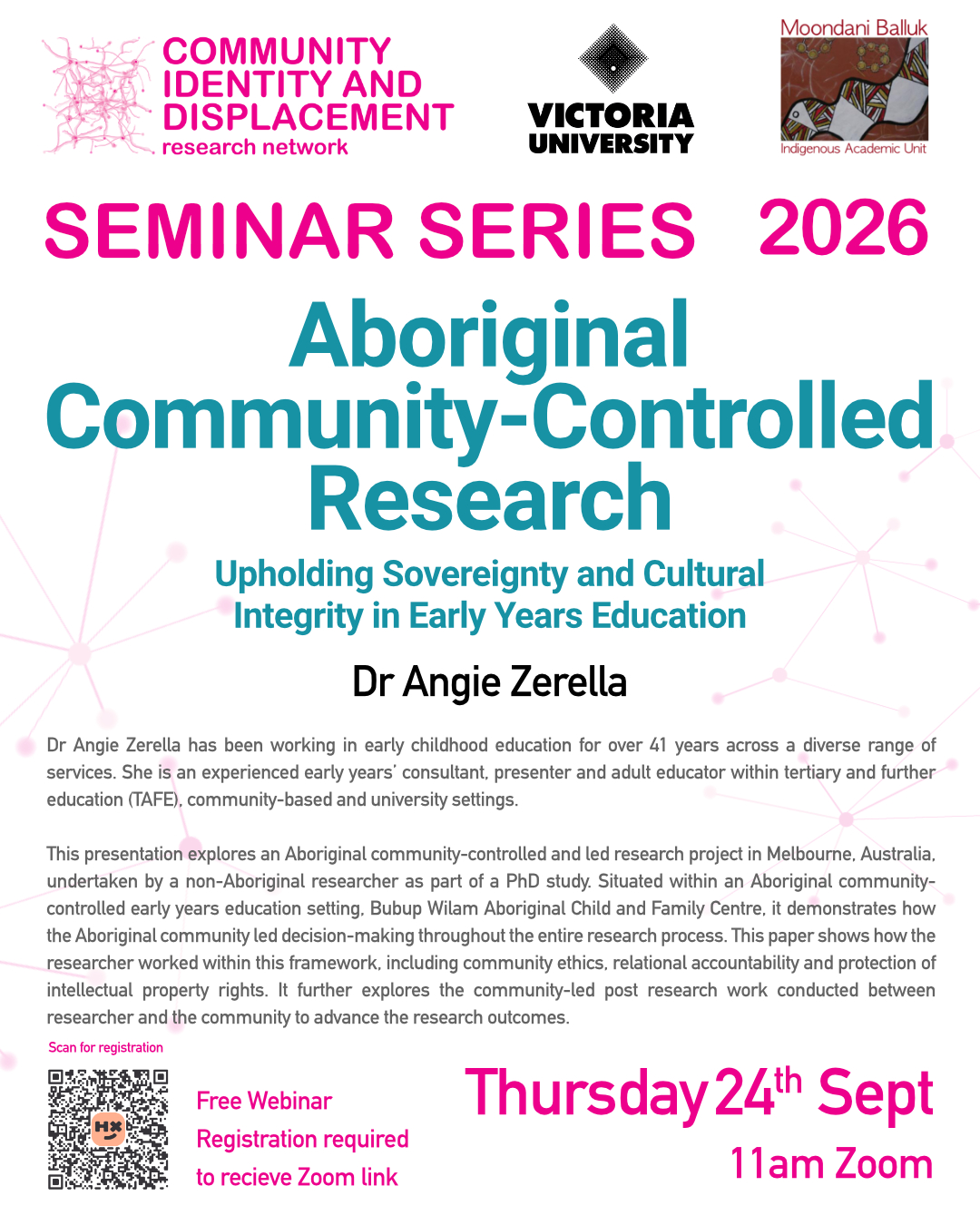
Dr Angie Zerella

has been working in early childhood education for over 41 years across a diverse range of services. She is an experienced early years’ consultant, presenter and adult educator within tertiary and further education (TAFE), community-based and university settings. 

This presentation explores an Aboriginal community-controlled and led research project in Melbourne, Australia, undertaken by a non-Aboriginal researcher as part of a PhD study. Situated within an Aboriginal community-controlled early years education setting, Bubup Wilam Aboriginal Child and Family Centre, it demonstrates how the Aboriginal community led decision-making throughout the entire research process. This paper shows how the researcher worked within this framework, including community ethics, relational accountability and protection of intellectual property rights. It further explores the community-led post research work conducted between researcher and the community to advance the research outcomes.

OCTOBER SEMINAR

Coming Soon

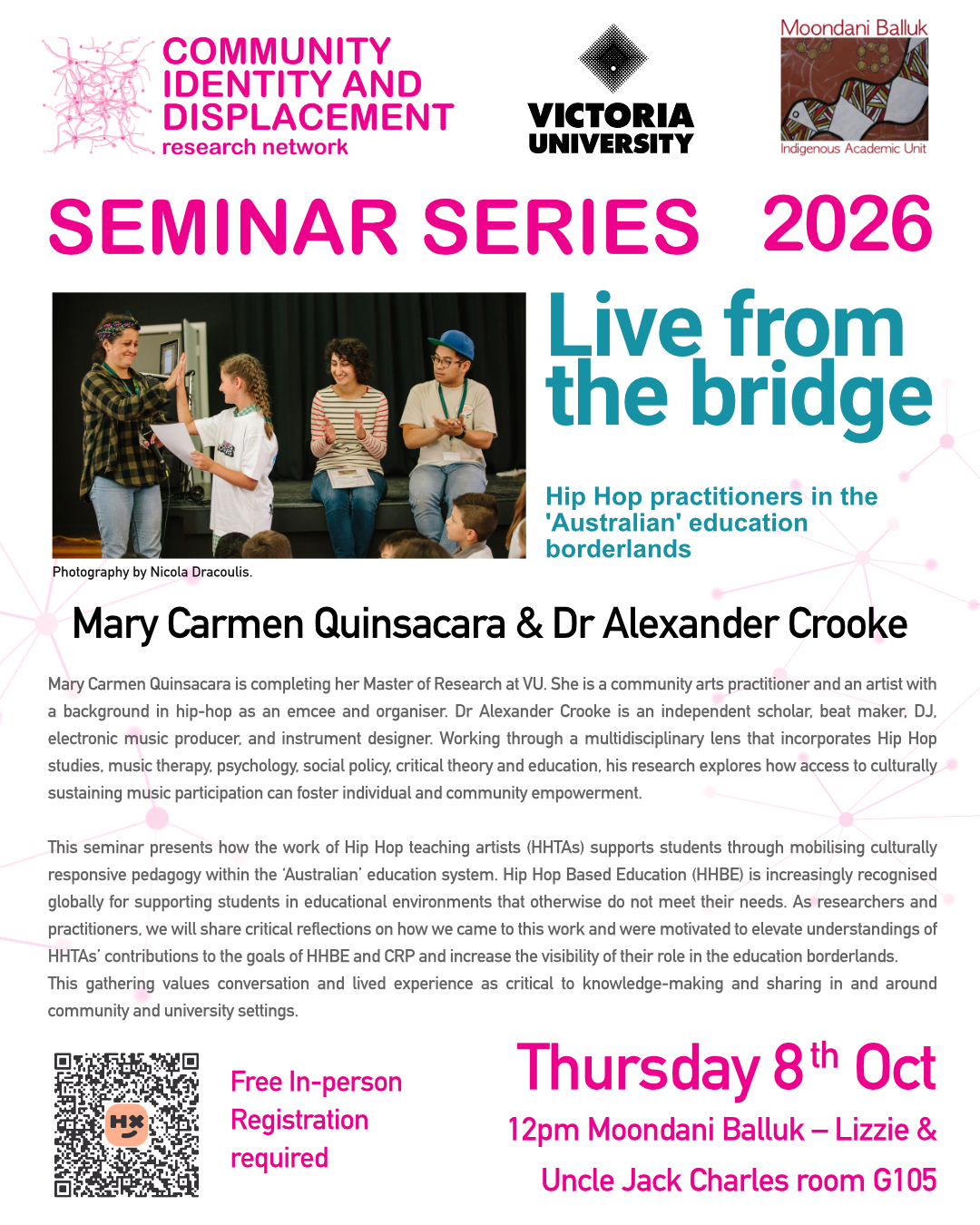
Mary Carmen Quinsacara & Dr Alexander Crooke

Mary Carmen Quinsacara is completing her Master of Research at VU. She is a community arts practitioner and an artist with a background in hip-hop as an emcee and organiser. Dr Alexander Crooke is an independent scholar, beat maker, DJ, electronic music producer, and instrument designer. Working through a multidisciplinary lens that incorporates Hip Hop studies, music therapy, psychology, social policy, critical theory and education, his research explores how access to culturally sustaining music participation can foster individual and community empowerment.

This seminar presents how the work of Hip Hop teaching artists (HHTAs) supports students through mobilising culturally responsive pedagogy within the ‘Australian’ education system. Hip Hop Based Education (HHBE) is increasingly recognised globally for supporting students in educational environments that otherwise do not meet their needs. As researchers and practitioners, we will share critical reflections on how we came to this work and were motivated to elevate understandings of HHTAs’ contributions to the goals of HHBE and CRP and increase the visibility of their role in the education borderlands.

This gathering values conversation and lived experience as critical to knowledge-making and sharing in and around community and university settings.